
Small businesses in the United States lose between 20% and 40% of their customer base every year — a silent revenue drain that costs far more than most entrepreneurs realize. With customer acquisition costs rising 222% over the past five years (Invesp, 2024), retaining the clients you already have has become the highest-ROI growth strategy available to small business owners in 2026. According to research by Bain & Company, a 5% increase in customer retention can boost profits by 25% to 95%.
For Brazilian entrepreneurs running businesses in the United States, customer retention is not just a marketing tactic — it is a financial lifeline. This guide covers the most effective, data-backed retention strategies you can implement today, regardless of your industry or budget.
Why Customer Retention Is the Smartest Investment for Small Businesses in 2026
The numbers tell a compelling story. In 2026, repeat customers are 60–70% likely to purchase again, while new prospects convert at only 5–20% (Invesp, 2024). Loyal customers spend approximately 67% more than first-time buyers, and companies generate 65% of their revenue from repeat customers (Markinblog, 2026). Loyalty program members generate 12–18% more incremental revenue per year than non-members (Attentive State of Loyalty Report, 2026). The U.S. loyalty program market reached $27.26 billion in 2025 and is growing at 15.7% annually.
In a business environment shaped by inflation, supply chain pressures, and rising advertising costs, acquiring new customers has become increasingly expensive. Retention is not the conservative choice — it is the competitive advantage.
The Real Cost of Losing a Customer
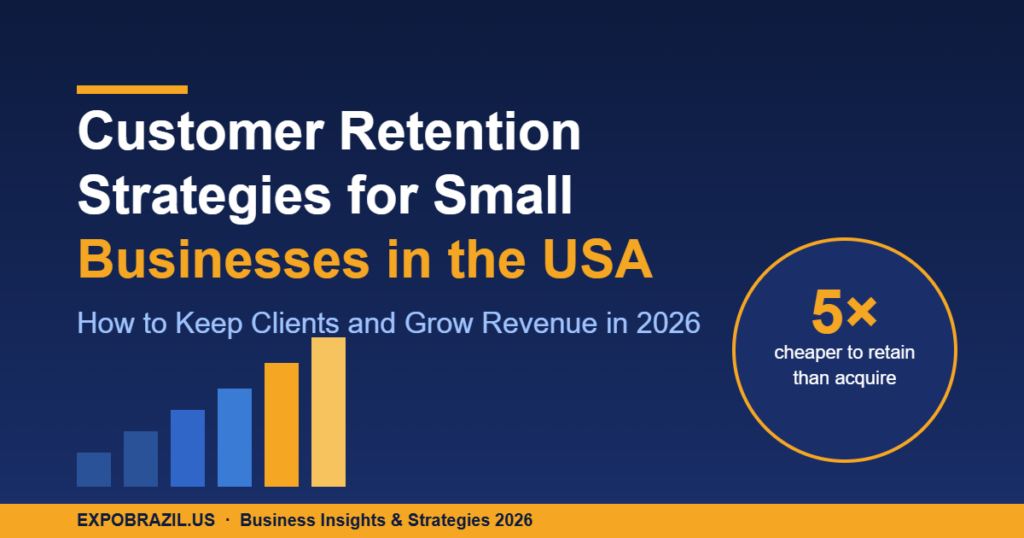
Losing a customer is not just about losing one sale. Studies consistently show that acquiring a new customer costs 5 to 25 times more than retaining an existing one, depending on the industry. For B2B companies, that ratio reaches 7×. E-commerce brands lose an average of $29 on every new customer they acquire before that customer generates profit (Churnkey, 2026). Customer acquisition costs rose 222% from 2013 to 2024, widening the retention advantage further every year.
5 Proven Customer Retention Strategies for Small Business Owners in the USA
1. Launch a Loyalty Program — Even a Simple One
Loyalty programs are the most direct way to incentivize repeat purchases. In 2026, 80% of Americans are members of at least one loyalty program, and 72% say a loyalty program makes them more likely to return to a brand (Attentive, 2026). Loyalty program members are 59% more likely to choose a brand over a competitor and 43% more likely to buy weekly.
Small businesses do not need a complex system. A simple digital punch card (buy 9, get 1 free) or a points system (1 point per $1 spent) is enough to change customer behavior. Platforms like Smile.io (free up to 200 orders/month) and Loopy Loyalty (from $25/month) offer affordable entry points designed specifically for small businesses. According to a 2026 analysis by US Tech Automations, automated loyalty programs generate a median ROI of $5.80 for every $1 invested, compared to just $1.40 for manual programs.
2. Personalize Your Follow-Up Communications
Generic newsletters are losing their effectiveness. In 2026, customers expect relevant, personalized communication — not mass emails. Businesses that personalize post-purchase follow-ups reduce early churn by 15–20%. A simple email sent 5 days after a purchase asking “How is everything working for you?” costs almost nothing and signals that you care. Tools like Mailchimp (free up to 500 contacts), Klaviyo, and HubSpot allow small businesses to segment customers by purchase history and automate personalized sequences.
3. Create a Consistent Post-Purchase Experience
The purchase is not the finish line — it is the beginning of the retention journey. Businesses that invest in a structured post-purchase experience — confirmation emails, onboarding guides, check-in calls, or thank-you notes — see significantly higher repeat purchase rates. Automated loyalty programs increase repeat purchase rates by 25–40% within 6 months of implementation. For service-based businesses — common among Brazilian entrepreneurs in the United States — this might mean a follow-up call one week after service delivery, a personalized card, or an exclusive return discount for existing clients.
4. Ask for Feedback — and Act on It
Customers who feel heard are customers who stay. A short feedback survey after every purchase or service — via email, SMS, or QR code — gives you actionable data and signals to your customer that their opinion matters. Free tools like Google Forms, Typeform, and SurveyMonkey make this easy to deploy. Publicly responding to reviews (both positive and negative) on Google Business, Yelp, and social media demonstrates accountability. Customers who see negative reviews addressed professionally are significantly more likely to trust and patronize a business.
5. Leverage AI Tools for Smarter Retention
Artificial intelligence is becoming the retention autopilot for small businesses in 2026. One-third of small business owners already use AI tools, and another 27% plan to adopt them in the coming year (Global Trade Magazine, 2026). AI-powered CRM tools can identify which customers are at risk of churning before they leave — giving business owners time to intervene with a targeted offer or personalized message. Platforms like HubSpot CRM (free tier available) and Zoho CRM include AI features that flag at-risk accounts, automate follow-ups, and track customer lifetime value.
Affordable Loyalty Program Tools for Small Businesses in 2026
Budget is always a consideration for small business owners. The most accessible loyalty platforms in 2026 include Smile.io (free up to 200 orders/month, ideal for e-commerce), Loop.fans (free plan with points, punch cards, and referral campaigns), Loopy Loyalty (digital punch cards from $25/month, great for restaurants and service businesses), and Zoho Thrive (integrates with CRM and e-commerce tools). Most platforms offer free trials. For Brazilian entrepreneurs just starting out, a simple digital punch card is sufficient to test the concept before investing in more advanced software.
Frequently Asked: How Much Does It Cost to Retain a Customer vs. Acquire a New One?
Retaining an existing customer costs, on average, 5 to 25 times less than acquiring a new one, depending on the industry and business model. For B2B businesses, the ratio is typically 7×. E-commerce businesses that invest in retention programs report recovering their program costs within 3 to 6 months, with a median ROI of $5.80 per dollar spent (US Tech Automations, 2026). A 5% improvement in customer retention can increase profits by 25% to 95% — making it one of the highest-leverage moves available to any small business owner in the United States in 2026.
How Brazilian Entrepreneurs in the USA Can Benefit From Retention Strategies
Brazilian entrepreneurs in the United States frequently build their businesses on trust, community relationships, and word-of-mouth referrals. These cultural strengths are a natural foundation for effective customer retention. When combined with modern tools — loyalty apps, automated follow-ups, and CRM systems — they become a powerful competitive advantage.
Immigrant-owned businesses in the U.S. serve highly loyal community segments. A structured retention strategy reinforces and monetizes that natural loyalty. According to the U.S. Small Business Administration (SBA), immigrant-owned businesses contribute more than $1 trillion in annual economic output — and customer loyalty is one of the key drivers of that success.
The Expo Brazil, the largest Brazilian entrepreneur expo in the United States, takes place on April 10–11, 2027, at Osceola Heritage Park in Kissimmee, FL — and it is one of the best venues to discover tools, partners, and strategies that support long-term business growth and customer retention.
Frequently Asked Questions
Conclusion: Retention Is Not Optional — It Is Strategy
Customer retention strategies are the most cost-effective growth lever available to small business owners in the United States in 2026. With acquisition costs rising and competition intensifying, keeping the clients you already have — and making them feel valued enough to refer others — is not just smart. It is essential. Start simple: a digital punch card, a personalized follow-up email, a short feedback survey. Then build from there. The businesses that master customer retention in 2026 will not only survive market pressures — they will outgrow competitors still spending all their energy chasing new leads.
About Expo Brazil
Expo Brazil is more than an event. It is a business platform created to connect entrepreneurs, brands and opportunities in the United States.
The next edition of Expo Brazil will take place on April 10 and 11, 2027, from 11:00 AM to 5:00 PM, at Osceola Heritage Park, 1901 Chief Osceola Trail, Kissimmee, FL.
Learn more at https://expobrazil.us/ and follow us on Instagram: https://www.instagram.com/expobrazil/
References
- Bain & Company — Customer Retention Economics (cited via Invesp and Markinblog, 2026)
- Invesp — Customer Acquisition vs. Retention Costs — invespcro.com
- Attentive — 2026 State of Loyalty & Retention Report — attentive.com
- US Tech Automations — Small Business Loyalty Program Automation ROI: 2026 Analysis — ustechautomations.com
- DemandSage — Customer Retention Statistics 2026 — demandsage.com
- Zoho Thrive — 30+ Loyalty Program Statistics 2026 — zoho.com
- Global Trade Magazine — Small Business Marketing Predictions for 2026 — globaltrademag.com
- U.S. Small Business Administration — sba.gov
- Churnkey — Customer Acquisition vs. Retention Cost Comparison Guide — churnkey.co
Disclaimer
The information published in this article is based on publicly available data from reliable sources, official publications, and research available at the time of writing. Business statistics, market data, regulatory requirements, tax rules, and all other details referenced in this article are subject to change without prior notice.
Expo Brazil makes no representations or warranties — express or implied — regarding the accuracy, completeness, or timeliness of any information contained herein. This article is intended for general informational purposes only and does not constitute legal, financial, tax, or business advice. Readers are strongly encouraged to verify all information directly through official government agencies, licensed professionals, and authoritative sources before making any business, financial, or investment decisions.
Last updated: May 29, 2026 · Expo Brazil Editorial Team · Contact Us